Snakes Around Pools: The Backyard Surprise Nobody Wants This Summer
June 15, 2026
What Is The Difference Between A Canebrake Rattlesnake And A Timber Rattlesnake?
July 12, 2026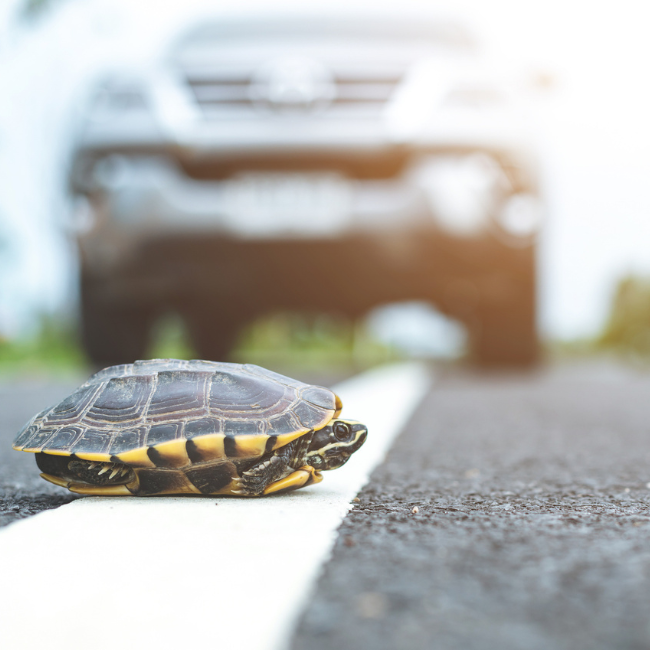
If you find a turtle in the road, help only if you can do it safely. Pull over in a safe spot, turn on your hazard lights and watch for traffic before you get out. Move the turtle in the same direction it was already going, then let it continue on its way.
Turtles cross roads often during warm months in coastal South Carolina. They search for food, water, nesting spots and new habitat. Around the Grand Strand, roads near ponds, marshes, ditches, creeks and wooded lots can become turtle crossing zones during summer.
Why Do Turtles Cross Roads?
Turtles cross roads because roads often cut through the wet areas, nesting areas and travel paths they use. During warm months, females might cross roads to find safe nesting spots. Other turtles might move between ponds, drainage areas, marsh edges and low wooded areas.
A turtle in the road is not lost in the way people think. It usually has a direction in mind. That’s why turning it around often creates a bigger problem. It will likely try to cross again.
How Do You Help A Turtle Cross The Road Safely?
Move the turtle in the direction it was already heading if traffic allows you to do so safely. Keep the turtle low to the ground and carry it carefully with both hands along the sides of the shell. Place it several feet off the road, away from traffic, then back away.
Do not move the turtle to a random pond, yard or wooded area far from where you found it. Turtles know their home range, and moving them too far can stress them or put them in the wrong habitat.
What Should You Never Do With A Turtle In The Road?
Never take a wild turtle home, keep it as a pet or relocate it to where you think it would “like it better.” Wild turtles belong in the wild, and they know where they need to go better than we do.
Also, never pick up a turtle by its tail. That can hurt its spine. Don’t toss it, spin it around or place it in your car unless a licensed wildlife professional or rescue group tells you to do that for an injured turtle. Your goal is simple: help it cross safely and leave it alone.
How Should You Handle A Snapping Turtle In The Road?
If you find a snapping turtle in the road, do not pick it up near the head or tail. Snapping turtles have strong jaws and long necks, so they can reach farther than people expect.
If you feel unsure, don’t risk it. Keep your distance, warn other drivers if you can do so safely and call for help. You can sometimes guide a snapping turtle with a flat object like a car mat or shovel, but only if you can stay clear of its head and out of traffic. When in doubt, wait for a professional.
What If The Turtle Looks Injured Or Stuck?
If the turtle looks injured, trapped or stuck in a dangerous spot, call for help instead of trying to fix the situation yourself. Signs of trouble include bleeding, cracked shell damage, trouble moving, being caught in fencing or getting trapped near a pool, storm drain or busy road.
The Snake Chaser can help with nuisance wildlife situations and guide you on the safest next step. If the turtle needs specialized medical care, we can help point you toward the right kind of wildlife support.
Why Shouldn’t You Make A Turtle A Pet?
You should not make a wild turtle a pet because removing it from its habitat harms the animal and can create legal or health concerns. Wild turtles often carry bacteria and parasites, and they need specific food, water, temperature and habitat conditions to stay healthy.
A turtle that seems cute on the road still belongs outside. The best way to help is to get it across safely, then let it live its life in the wild.
When Should You Call The Snake Chaser For A Turtle In The Road?
Call The Snake Chaser if the turtle is injured, stuck, blocking a busy area or in a spot where you cannot help safely. You should also call if the turtle sits near a pool enclosure, business entrance, parking lot or other high-risk place where people, pets or traffic could create danger.
We can help handle the situation safely and calmly. The goal is always to protect people and wildlife while reducing stress for the animal.
How Can Drivers Help Turtles During Summer?
Drivers can help turtles by slowing down near ponds, marshes, drainage ditches and wooded roads during warm months. Watch for small shapes moving across pavement, especially after rain or during nesting season.
If you see a turtle and cannot stop safely, do not swerve into traffic. Slow down if you can, avoid hitting it and let other drivers know with caution. Human safety comes first, but a little extra awareness can save a turtle’s life.
How Can You Help Turtles Without Causing Harm?
The best way to help a turtle is to act calmly, keep it moving in the same direction and avoid turning it into a pet project. Move it only if you can do so safely, never take it home and never relocate it far away.
If a turtle in the road creates a tricky or unsafe situation, call The Snake Chaser. We’ll help you protect the turtle, protect yourself and make the right choice in the moment.
FAQs
1. Should I Move A Turtle In The Road?
Yes, you can move a turtle in the road if you can do it safely. Move it in the same direction it was already going and place it off the road away from traffic. If the road is too busy or the turtle looks injured, call for help instead of putting yourself in danger.
2. Why Shouldn’t I Turn A Turtle Around?
You should not turn a turtle around because it will likely try to cross the road again. Turtles usually have a goal, such as reaching water, food or a nesting area. Moving it backward can force it to make the same dangerous crossing twice.
3. Can I Keep A Turtle I Find In The Road?
No, you should not keep a turtle you find in the road. Wild turtles belong in their natural habitat and need specific care that most people cannot provide. Help it cross safely if you can, then leave it in the wild where it belongs.